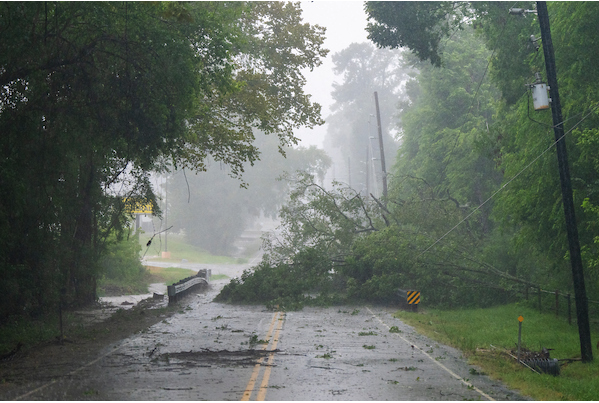
Hurricane preparedness critical for inland Texas during storm season
Hurricanes are associated with coastal communities, but inland Texans can face significant impacts from the flooding, power outages, road closures and agricultural losses that often accompany these storms.The Texas A&M AgriLife Extension Service encourages residents and agricultural producers to prepare before a storm develops. Early preparation can help reduce risks to families, livestock, property and agricultural operations.
Flooding remains one of the most significant threats associated with hurricanes and tropical storms in inland areas. Communities located far from the coast can still experience heavy rainfall, flash flooding and extended disruptions to infrastructure and essential services.
“Someone inland should think about two things: how much wind damage we could have, but also if that particular system stalls and begins to dump a lot of rain in one area,” said Monty Dozier, Ph.D., AgriLife Extension Disaster Assessment and Recovery director. “We’ve had some tropical depressions that have actually dropped more rain than a hurricane might generate.”
Emergency preparedness begins before a storm
Residents should maintain enough emergency supplies to support household members for at least three to five days. Recommended items include drinking water, nonperishable food, medications, flashlights, batteries, hygiene supplies, cash and backup charging devices.
Plan to be self-sufficient for at least 72 hours, Dozier recommended.
“It may be that long before you get power back on, before search and rescue might get to you, or before you may be able to get out because of a flooding situation,” he said.
Families should have supplies for pets in their emergency plans, Dozier said.
Additional preparation includes:
- Sign up for emergency alerts on mobile devices.
- Review local emergency plans.
- Identify alternate travel routes in the event flooding blocks roadways.
- Secure outdoor furniture.
- Trim weak tree branches.
- Clear gutters and drainage areas.
- Store important documents in a safe location.
Agricultural operations should take additional precautions
Agricultural producers face unique challenges before, during and after severe weather events.
Some tips to help prepare for those challenges are:
- Move livestock to higher ground when possible and provide access to clean water sources that are less likely to be contaminated during flooding.
- Identify livestock through ear tags, brands or other markings in case animals become displaced.
- Inspect and reinforce fences, gates, barns and other facilities prior to a storm’s arrival.
- Relocate equipment such as tractors, trailers and implements to higher ground.
- Secure fuel tanks, pesticides and fertilizers to help prevent leaks and environmental contamination.
- Store hay, feed and other agricultural inputs in elevated and dry locations whenever possible.
Producers may also benefit from documenting current field conditions and infrastructure through photographs to support future insurance claims or disaster assistance applications.
Safety remains a priority during and after a storm
As a hurricane approaches, residents should complete final preparations:
- Charge electronic devices.
- Fill vehicles with fuel.
- Secure homes and property.
During the storm, individuals should:
- Remain indoors in an interior room away from windows.
- Monitor weather updates.
- Avoid traveling on flooded roadways.
“Never drive into any kind of water during a flood event because we don’t know if that water is 2 feet deep or 20 feet deep, or what the roadbed looks like that’s been covered by water,” Dozier said,
Following a storm, residents should:
- Stay away from downed power lines.
- Inspect structures for damage before re-entering.
Agricultural recovery efforts should include:
- Check livestock for injuries.
- Inspect fences.
- Evaluate water quality.
- Dispose of spoiled feed or hay affected by floodwaters.
Dozier urged residents to use caution when returning to flooded property. Displaced snakes and other animals may have moved to higher ground, downed power lines may still be energized, and floodwater may contain contaminants. He recommended wearing long sleeves, long pants and rubber boots during the initial inspection.
Damage to homes, equipment, crops and livestock should be documented as soon as conditions are safe to support insurance claims and disaster recovery programs.
Inland Texans should remain vigilant
Although hurricanes typically make landfall along the Gulf Coast, their impact can extend hundreds of miles inland. Rural communities may experience prolonged power outages, limited access to fuel and supplies, and delayed emergency response due to flooding and damaged infrastructure.
Preparedness before a storm develops remains one of the most effective ways to protect people, property and agricultural operations throughout hurricane season.
“The best thing to do is prepare ahead of time and make sure you listen to what local authorities are telling you,” Dozier said.