AgriLife Extension tests far-ultraviolet light to prevent bird fluin poultry
When a strain of highly pathogenic avian influenza, HPAI, tore through U.S. poultry farms in early 2025, farmers culled tens of millions of birds and egg prices soared.
The losses highlighted the poultry industry’s urgent need for additional tools and methods to limit the virus’ spread.
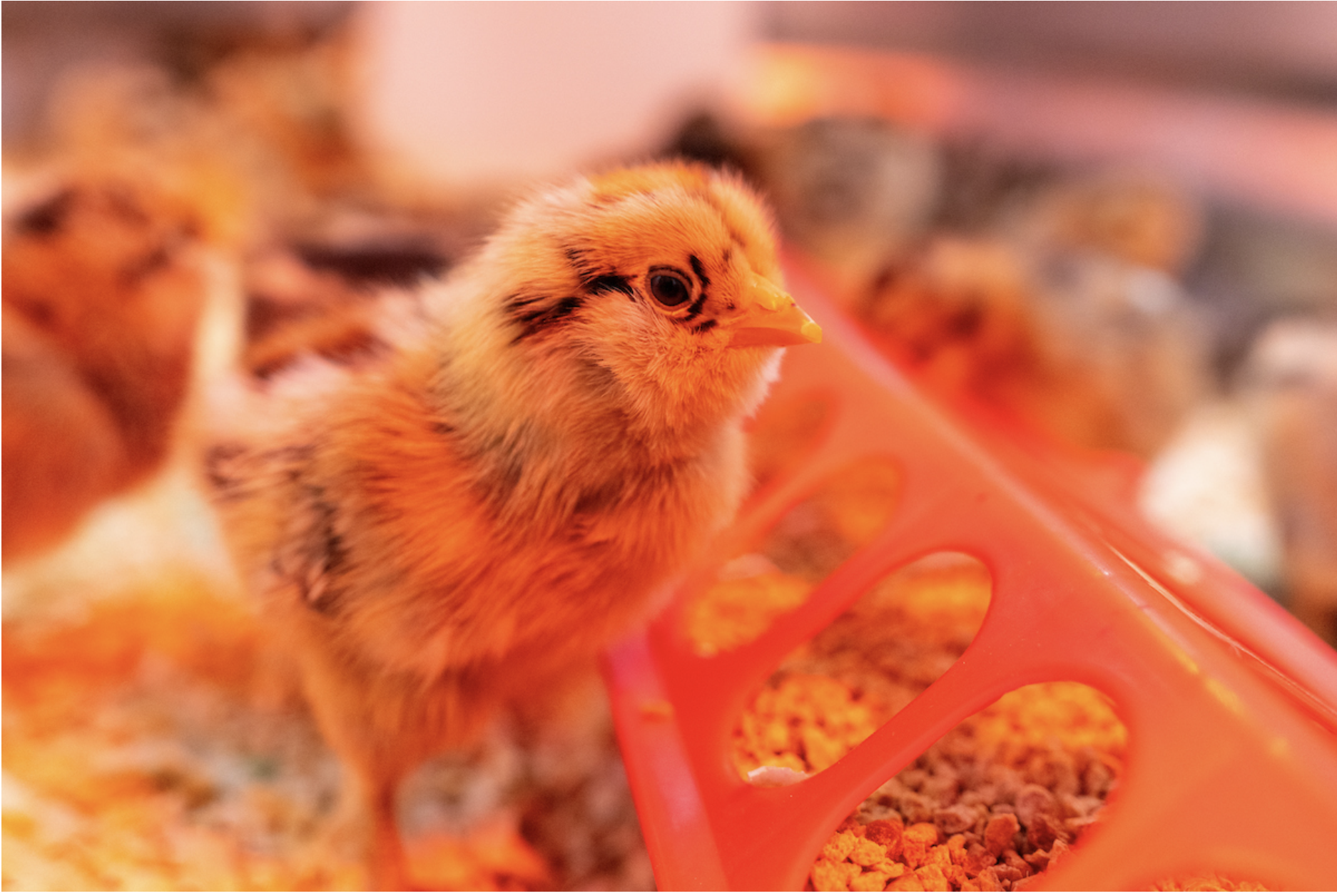
Now, researchers from the Texas A&M College of Agriculture and Life Sciences are preparing to test a new potential line of defense. They will use a form of ultraviolet light called far-UVC, to see if it can kill HPAI, without harming birds on poultry farms.
“The current HPAI outbreak began around 2022 and hasn’t ended,” said Morgan Farnell, Ph.D., avian microbiology and immunology professor, Texas A&M AgriLife Extension Service program leader and associate department head in the Texas A&M Department of Poultry Science, “Avian influenza is still being found in Texas wildlife. It is not considered to be endemic in the U.S. and is classified as a reportable poultry disease.”
Farnell and Ziteng “Tim” Xu, Ph.D., Texas A&M AgriLife Research smart technologies in poultry production scientist and assistant professor, Department of Poultry Science, will lead the third and final phase of a multiyear study starting in February, examining whether far-UVC light can reduce airborne pathogen loads inside commercial poultry houses.
Testing far-UVC light in real-world conditions
Far-UVC light differs from conventional germicidal UV light because it can inactivate viruses and bacteria without penetrating deeply enough to damage human or animal skin and eyes. Far-UVC light is of interest as an anti-pathogen tool because it could be used safely in occupied spaces such as hospitals, clinics, classrooms, restaurants and poultry houses.
Researchers from Columbia University Center for Radiological Research and St. Jude Children’s Research Hospital are studying how effective far-UVC light is against pathogens in a specialized isolator. The results established the groundwork for further testing in commercial farm settings. Farnell said.
Texas A&M’s role is to determine whether far-UVC performs similarly under commercial conditions.
“The isolators used at St. Jude are small and not very representative of the real world,” Farnell said. “We’ll stock birds at commercial density and test it at Texas A&M.”
Researchers will use air-sampling equipment to measure indicator organisms, including aerobic bacteria, coliforms and Staphylococcus aureus, before and after far-UVC exposure. Those readings will inform far-UVC’s potential impact on pathogens like HPAI.
The Barbara J. Huffman and William M. “Bill” Huffman ’53 Poultry Science Farm Complex, where the trials will be conducted, along with the department’s Biosafety Level 2 laboratory and biosecurity and environmental sampling experience, made the university a natural partner for the project’s applied phase, Farnell said.
Measuring how far-UVC works around birds
Xu will focus on the engineering challenges of deploying the technology in poultry houses. Dust can absorb or scatter far-UVC light before it reaches spaces occupied by birds. His team will measure how much ultraviolet radiation reaches those areas.
Using artificial intelligence-assisted camera tracking, researchers also will monitor whether the light will affect the behavior, circadian rhythms and growth performance in the chickens.
Xu is also designing an integrated disinfection system that combines far-UVC air treatment with UVC-enabled positive-pressure ventilation and robotic floor-disinfection modules.
The team will test which components are necessary to effectively control pathogens. If the project is successful, researchers could eventually apply the technology beyond poultry facilities to swine and dairy operations, Xu said.
A potential new tool for poultry producers
The study by Farnell and Xu will span two years and include four flocks, two raised under summer conditions and two under winter conditions.
Farnell said the poultry industry needs new tools to protect bird health. The industry has steered away from using antibiotics over the past decade. However, vaccinating for avian influenza is problematic with broilers for a number of reasons.
Any tool must maintain flock productivity to make economic sense for farmers, he said. Fewer infections could reduce mortality and economic losses throughout the poultry supply chain.
“Anything to improve bird health improves animal welfare and ultimately creates better outcomes for producers,” Farnell said.
The project is funded through a $2 million U.S. Department of Agriculture Animal and Plant Health Inspection Service grant from the Highly Pathogenic Avian Influenza Poultry Innovation Grand Challenge award.